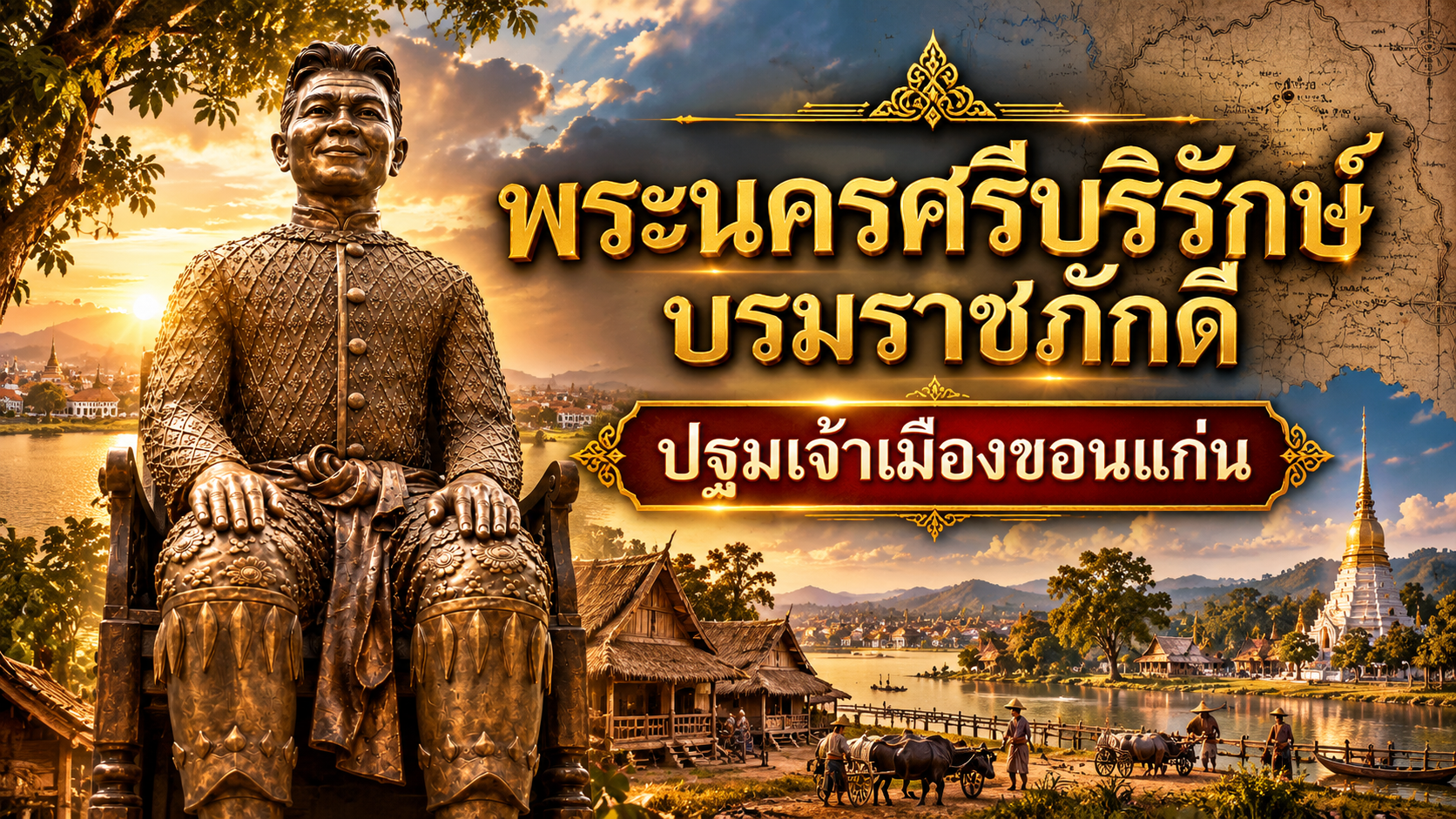
พระนครศรีบริรักษ์บรมราชภักดี
ปฐมเจ้าเมืองขอนแก่น ผู้วางรากฐานแห่งนครอีสาน และบุคคลสำคัญในประวัติศาสตร์เมืองขอนแก่น
จากผู้นำผู้คนอพยพแสวงหาถิ่นฐาน สู่ผู้ก่อตั้งเมืองขอนแก่น เมื่อ พ.ศ. 2340 เรื่องราวของบุคคลสำคัญผู้มีบทบาทในการสร้างบ้านแปงเมือง และวางรากฐานให้ชุมชนเล็ก ๆ เติบโตเป็นมหานครสำคัญแห่งภาคตะวันออกเฉียงเหนือของประเทศไทย
พระนครศรีบริรักษ์บรมราชภักดี คือใคร?
หากกล่าวถึงจังหวัดขอนแก่นในปัจจุบัน หลายคนคงนึกถึงเมืองใหญ่ที่เป็นศูนย์กลางทางเศรษฐกิจ การศึกษา การแพทย์ และวัฒนธรรมของภาคตะวันออกเฉียงเหนือ แต่ก่อนที่ขอนแก่นจะเติบโตเป็นเมืองสำคัญเช่นทุกวันนี้ ดินแดนแห่งนี้เคยเป็นชุมชนขนาดเล็กที่แวดล้อมด้วยป่าไม้ หนองน้ำ และพื้นที่ทำกินของผู้คนในอดีต การก่อกำเนิดเมืองขอนแก่นในฐานะเมืองทางการปกครองมีความเกี่ยวข้องอย่างสำคัญกับบุคคลผู้หนึ่ง นั่นคือ พระนครศรีบริรักษ์บรมราชภักดี หรือที่รู้จักกันในนาม “ท้าวเพียเมืองแพน” ผู้ได้รับการแต่งตั้งให้ดำรงตำแหน่งเจ้าเมืองขอนแก่นคนแรกในสมัยรัชกาลที่ 1 แห่งกรุงรัตนโกสินทร์
เรื่องราวของท่านมิใช่เพียงประวัติของขุนนางหรือผู้ปกครองเมือง หากยังสะท้อนถึงการอพยพของผู้คน การแสวงหาถิ่นฐานใหม่ ความสัมพันธ์ระหว่างหัวเมืองอีสานกับราชสำนักกรุงเทพมหานคร ตลอดจนความพยายามสร้างชุมชนให้กลายเป็นบ้านเมืองที่มั่นคง ชื่อของพระนครศรีบริรักษ์บรมราชภักดีจึงมีความหมายอย่างยิ่งต่อความทรงจำทางประวัติศาสตร์ของชาวขอนแก่น
จากบ้านชีโหล่น สู่การแสวงหาถิ่นฐานแห่งใหม่
ย้อนกลับไปในช่วงปลายพุทธศตวรรษที่ 23 ดินแดนภาคตะวันออกเฉียงเหนือยังประกอบด้วยหัวเมืองและชุมชนต่าง ๆ ที่มีความสัมพันธ์ทางการเมืองและวัฒนธรรมกับอาณาจักรล้านช้าง รวมถึงเมืองสำคัญบริเวณลุ่มแม่น้ำชีและแม่น้ำมูล ท้าวเพียเมืองแพนเป็นบุคคลที่มีความเกี่ยวข้องกับกลุ่มชนชั้นปกครองในพื้นที่เมืองร้อยเอ็ดและเมืองสุวรรณภูมิ โดยมีถิ่นฐานอยู่ที่บ้านชีโหล่น แขวงเมืองสุวรรณภูมิ ซึ่งปัจจุบันอยู่ในเขตอำเภออาจสามารถ จังหวัดร้อยเอ็ด ตามข้อมูลประวัติศาสตร์ท้องถิ่น ในช่วงประมาณ พ.ศ. 2332–2340 ท้าวเพียเมืองแพนได้รวบรวมผู้คนจำนวนหลายร้อยคนออกเดินทางจากถิ่นฐานเดิม เพื่อแสวงหาพื้นที่สำหรับตั้งชุมชนแห่งใหม่ เอกสารบางฉบับระบุว่ามีผู้ร่วมเดินทางประมาณ 330 คน ขณะที่บางแหล่งกล่าวถึงประมาณ 330 ครอบครัว จึงอาจกล่าวโดยรวมได้ว่าเป็นการอพยพของกลุ่มผู้คนจำนวนมากพอที่จะก่อตั้งชุมชนใหม่ได้ คณะผู้อพยพได้เดินทางมายังบริเวณบ้านดอนกระยอม ซึ่งอยู่ในเขตอำเภอบ้านไผ่ จังหวัดขอนแก่นในปัจจุบัน ก่อนที่จะย้ายไปตั้งชุมชนบริเวณ บ้านบึงบอน ซึ่งเป็นพื้นที่สำคัญในการก่อตั้งเมืองขอนแก่น บริเวณดังกล่าวอยู่ใกล้กับบึงแก่นนครในปัจจุบัน มีแหล่งน้ำและสภาพแวดล้อมที่เหมาะสมต่อการตั้งถิ่นฐานและประกอบอาชีพเกษตรกรรม การเคลื่อนย้ายผู้คนในครั้งนั้นจึงเป็นจุดเริ่มต้นสำคัญของการสร้างเมืองขอนแก่นในเวลาต่อมา
พ.ศ. 2340 ปีแห่งการสถาปนาเมืองขอนแก่น
เมื่อชุมชนบ้านบึงบอนมีความมั่นคงมากขึ้น ท้าวเพียเมืองแพนได้ดำเนินการขอจัดตั้งเมืองขึ้นใหม่ โดยผ่านเจ้าพระยานครราชสีมา ซึ่งมีบทบาทในการกำกับดูแลหัวเมืองในภูมิภาคนี้ เจ้าพระยานครราชสีมาได้มีใบบอกกราบบังคมทูลเรื่องดังกล่าวไปยังราชสำนักกรุงเทพมหานคร กระทั่งในปี พุทธศักราช 2340 ตรงกับรัชสมัยพระบาทสมเด็จพระพุทธยอดฟ้าจุฬาโลกมหาราช รัชกาลที่ 1 ได้มีพระบรมราชโองการโปรดเกล้าฯ ให้ยกฐานะบ้านบึงบอนขึ้นเป็นเมืองขอนแก่น พร้อมกันนั้น ท้าวเพียเมืองแพนได้รับการแต่งตั้งให้เป็นเจ้าเมืองคนแรก โดยได้รับบรรดาศักดิ์ว่า “พระนครศรีบริรักษ์บรมราชภักดี”
การแต่งตั้งครั้งนี้ถือเป็นเหตุการณ์สำคัญ เพราะเป็นการยกระดับชุมชนเข้าสู่ระบบการปกครองหัวเมืองในสมัยกรุงรัตนโกสินทร์ เมืองขอนแก่นจึงมีสถานะเป็นหน่วยการปกครองที่ได้รับการรับรองจากราชสำนัก และมีเจ้าเมืองรับผิดชอบดูแลผู้คนและกิจการของเมืองอย่างเป็นทางการ อย่างไรก็ตาม การก่อตั้งเมืองขอนแก่นใน พ.ศ. 2340 มิได้หมายความว่าดินแดนแห่งนี้เพิ่งมีมนุษย์เข้ามาอยู่อาศัยเป็นครั้งแรก เพราะพื้นที่จังหวัดขอนแก่นมีร่องรอยการตั้งถิ่นฐานของผู้คนมาตั้งแต่สมัยก่อนประวัติศาสตร์ ปี พ.ศ. 2340 จึงมีความสำคัญในฐานะการสถาปนาเมืองขอนแก่นตามระบบการปกครองของรัฐในสมัยนั้น มากกว่าการเริ่มต้นประวัติศาสตร์ทั้งหมดของดินแดนแห่งนี้
ที่มาของชื่อ “ขอนแก่น” กับตำนานพระธาตุขามแก่น
เรื่องราวที่น่าสนใจอีกประการหนึ่งคือที่มาของชื่อเมืองขอนแก่น ซึ่งมีความเชื่อมโยงกับตำนานพระธาตุขามแก่น ปูชนียสถานสำคัญของจังหวัด ตามตำนานท้องถิ่นกล่าวว่า ในอดีตมีต้นมะขามต้นหนึ่งที่ยืนต้นตาย เหลือเพียงแก่นไม้เก่าแก่ แต่ภายหลังกลับเกิดเหตุอัศจรรย์ โดยต้นมะขามที่แห้งตายได้ฟื้นคืนชีวิตและผลิใบเขียวชอุ่มขึ้นอีกครั้ง เหตุการณ์ดังกล่าวได้รับการเล่าขานสืบต่อกันมา และมีความเกี่ยวข้องกับการสร้างพระธาตุขามแก่น ซึ่งตั้งอยู่ในเขตอำเภอน้ำพอง จังหวัดขอนแก่น เรื่องเล่าท้องถิ่นบางสำนวนอธิบายว่า เมื่อท้าวเพียเมืองแพนตั้งเมืองขึ้นใหม่ จึงได้นำชื่อที่มีความเกี่ยวข้องกับพระธาตุขามแก่นมาใช้เป็นนามเมืองว่า “ขอนแก่น” ชื่อดังกล่าวจึงมิได้เป็นเพียงชื่อทางภูมิศาสตร์ แต่ยังแฝงความหมายเชิงสัญลักษณ์เกี่ยวกับความมั่นคง ความศักดิ์สิทธิ์ และความเจริญงอกงาม ทั้งนี้ เรื่องราวเกี่ยวกับต้นมะขามที่ฟื้นคืนชีวิตและการตั้งชื่อเมืองควรเข้าใจในฐานะ ตำนานและความเชื่อท้องถิ่น ซึ่งมีคุณค่าทางวัฒนธรรม แม้รายละเอียดจะไม่สามารถยืนยันได้ทั้งหมดด้วยหลักฐานประวัติศาสตร์ร่วมสมัย
การสร้างวัดและการวางรากฐานทางศาสนา
สำหรับสังคมไทยและสังคมอีสานในอดีต การสร้างเมืองมิได้หมายถึงการสร้างบ้านเรือนหรือจัดตั้งระบบการปกครองเท่านั้น ศาสนาและวัดวาอารามยังเป็นองค์ประกอบสำคัญของชุมชน เพราะวัดทำหน้าที่เป็นทั้งศูนย์รวมจิตใจ สถานที่ประกอบพิธีกรรม ศูนย์กลางการศึกษา และพื้นที่สำหรับกิจกรรมส่วนรวม ประวัติท้องถิ่นกล่าวถึงบทบาทของท้าวเพียเมืองแพนในการสร้างและทำนุบำรุงวัดสำคัญในชุมชนเมืองขอนแก่นยุคแรก โดยมีการกล่าวถึงวัดที่ตั้งอยู่ในทิศทางต่าง ๆ ของเมือง ได้แก่ วัดเหนือ วัดกลาง และวัดใต้ รวมถึงวัดท่าแขกในข้อมูลบางแหล่ง การกำหนดพื้นที่ทางศาสนาเช่นนี้สะท้อนแนวคิดการสร้างบ้านแปงเมืองในวัฒนธรรมลุ่มน้ำโขง ซึ่งให้ความสำคัญกับความสัมพันธ์ระหว่างผู้ปกครอง พระสงฆ์ และประชาชน วัดไม่ได้เป็นเพียงสถานที่ประกอบศาสนกิจ แต่ยังช่วยเชื่อมโยงผู้คนที่อพยพมาจากถิ่นฐานต่าง ๆ ให้เกิดความรู้สึกเป็นส่วนหนึ่งของชุมชนเดียวกัน
ในแง่นี้ บทบาทของพระนครศรีบริรักษ์บรมราชภักดีจึงอาจมองได้ว่าเป็นการวางรากฐานทั้งด้านการปกครองและด้านจิตใจของชุมชนเมืองขอนแก่นยุคแรก อย่างไรก็ตาม รายละเอียดชื่อวัดและการเปลี่ยนแปลงสถานที่ตั้งในเอกสารต่าง ๆ มีความแตกต่างกันอยู่บ้าง จึงควรศึกษาประวัติวัดแต่ละแห่งประกอบด้วย
เจ้าเมืองในอดีต มิใช่เพียงผู้ปกครอง แต่คือผู้นำในการสร้างบ้านแปงเมือง
หากพิจารณาระบบการปกครองหัวเมืองในช่วงต้นกรุงรัตนโกสินทร์ ตำแหน่งเจ้าเมืองมีภารกิจแตกต่างจากตำแหน่งผู้ว่าราชการจังหวัดในปัจจุบันอย่างมาก เจ้าเมืองมีหน้าที่ดูแลความสงบเรียบร้อย จัดการกำลังคน ประสานความสัมพันธ์กับเมืองอื่น รวมถึงดำเนินภารกิจต่าง ๆ ตามระบบการปกครองและการส่งส่วยในยุคนั้น ด้วยเหตุนี้ การที่ท้าวเพียเมืองแพนสามารถนำผู้คนมาตั้งถิ่นฐานใหม่และได้รับการแต่งตั้งเป็นเจ้าเมือง จึงสะท้อนบทบาทของท่านในฐานะผู้นำที่สามารถรวบรวมกำลังคนและจัดตั้งชุมชนให้เข้าสู่ระบบการปกครองได้ สิ่งสำคัญที่ควรตระหนักคือ เมืองหนึ่งเมืองไม่ได้ก่อกำเนิดจากบุคคลเพียงคนเดียว เบื้องหลังการสถาปนาเมืองขอนแก่นยังประกอบด้วยแรงงาน ความร่วมมือ และความพยายามของครอบครัวและผู้คนจำนวนมากที่ร่วมเดินทางมาตั้งรกราก ดังนั้น การยกย่องพระนครศรีบริรักษ์บรมราชภักดีในฐานะปฐมเจ้าเมือง จึงควรเป็นการระลึกถึงทั้งบทบาทของผู้นำและผู้คนรุ่นบุกเบิกที่ร่วมกันสร้างบ้านเมืองแห่งนี้
จากเมืองขอนแก่นในอดีต สู่มหานครแห่งภาคอีสาน
ภายหลังการสถาปนาเมืองขอนแก่น เมืองได้ผ่านความเปลี่ยนแปลงอีกหลายช่วงสมัย ที่ตั้งศูนย์กลางการปกครองมีการโยกย้ายไปยังพื้นที่ต่าง ๆ ตามเงื่อนไขด้านการเมือง การคมนาคม แหล่งน้ำ และความเหมาะสมในการตั้งเมือง ทั้งบ้านดอนพันชาติ บ้านโนนทัน บ้านทุ่ม และบริเวณเมืองเก่า ล้วนมีความเกี่ยวข้องกับพัฒนาการของเมืองขอนแก่นในช่วงเวลาต่าง ๆ ต่อมาเมื่อประเทศไทยมีการปรับปรุงระบบบริหารราชการแผ่นดิน เมืองขอนแก่นก็ค่อย ๆ เปลี่ยนผ่านจากระบบหัวเมืองแบบเดิมเข้าสู่ระบบการปกครองส่วนภูมิภาคสมัยใหม่ ความเปลี่ยนแปลงเหล่านี้ทำให้ขอนแก่นพัฒนาจากชุมชนเกษตรกรรมและเมืองการปกครองในอดีต กลายเป็นศูนย์กลางเศรษฐกิจและการพัฒนาที่สำคัญแห่งหนึ่งของภาคตะวันออกเฉียงเหนือ แม้กาลเวลาจะผ่านไปกว่าสองศตวรรษ แต่เรื่องราวของผู้คนที่ร่วมก่อตั้งเมืองยังคงเป็นส่วนสำคัญของอัตลักษณ์ท้องถิ่น
อนุสาวรีย์พระนครศรีบริรักษ์บรมราชภักดี สัญลักษณ์แห่งความทรงจำของชาวขอนแก่น
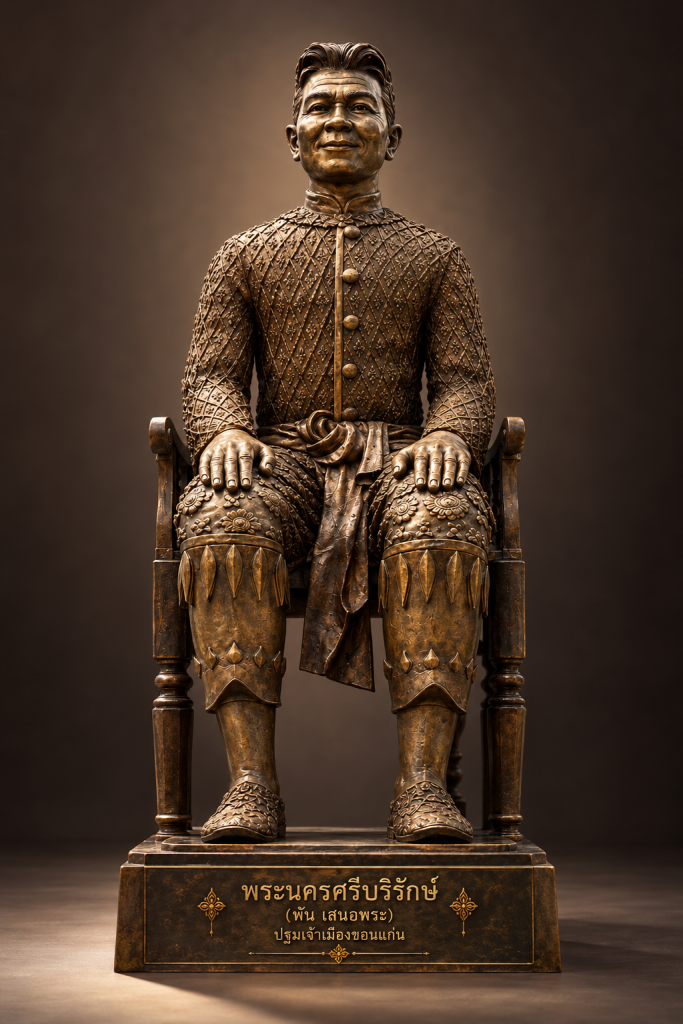
เพื่อเป็นการรำลึกถึงคุณูปการของผู้ก่อตั้งเมือง ชาวขอนแก่นได้จัดสร้างอนุสาวรีย์พระนครศรีบริรักษ์บรมราชภักดี หรืออนุสาวรีย์ท้าวเพียเมืองแพน ไว้บริเวณริมบึงแก่นนคร อนุสาวรีย์แห่งนี้เป็นสถานที่สำคัญทางประวัติศาสตร์และวัฒนธรรมที่เชื่อมโยงผู้คนในปัจจุบันเข้ากับเรื่องราวของเมืองในอดีต การสร้างอนุสาวรีย์มิได้มีความหมายเพียงการสร้างรูปเหมือนของบุคคลสำคัญ แต่ยังเป็นการแสดงความเคารพต่อความทรงจำร่วมกันของคนในท้องถิ่น สำหรับชาวขอนแก่นจำนวนมาก ท้าวเพียเมืองแพนจึงเป็นทั้งบุคคลสำคัญทางประวัติศาสตร์และสัญลักษณ์ของการก่อกำเนิดบ้านเมือง ข้อมูลของหน่วยงานด้านวัฒนธรรมยังกล่าวถึงการจัดพิธีบวงสรวงอนุสาวรีย์ในช่วงเทศกาลสำคัญ เพื่อระลึกถึงท่านและสืบสานประเพณีของท้องถิ่น ประเพณีดังกล่าวสะท้อนความสัมพันธ์ระหว่างประวัติศาสตร์กับความศรัทธาของชุมชน ซึ่งยังคงดำรงอยู่แม้สังคมจะเปลี่ยนแปลงไปตามกาลเวลา
มรดกของพระนครศรีบริรักษ์บรมราชภักดี
เมื่อพิจารณาประวัติศาสตร์การก่อกำเนิดเมืองขอนแก่น เราอาจมองเห็นบทเรียนสำคัญประการหนึ่งว่า ความเจริญรุ่งเรืองของบ้านเมืองไม่ได้เกิดขึ้นในชั่วข้ามคืน เมืองใหญ่ทุกแห่งล้วนมีจุดเริ่มต้นจากความพยายามของผู้คนในอดีต บางคนเป็นผู้นำ บางคนเป็นชาวนา บางคนเป็นช่างฝีมือ บางคนเป็นพระสงฆ์ และอีกหลายคนเป็นเพียงผู้คนธรรมดาที่ร่วมกันสร้างชุมชนขึ้นจากผืนแผ่นดิน พระนครศรีบริรักษ์บรมราชภักดีเป็นบุคคลสำคัญที่ปรากฏชื่ออยู่ในหน้าประวัติศาสตร์ของเมืองขอนแก่น เพราะท่านมีบทบาทในการรวบรวมผู้คน จัดตั้งชุมชน และนำไปสู่การสถาปนาเมืองอย่างเป็นทางการในปี พ.ศ. 2340 จากบ้านบึงบอนในอดีต สู่เมืองขอนแก่นในปัจจุบัน ระยะเวลากว่าสองศตวรรษได้เปลี่ยนแปลงภูมิทัศน์และวิถีชีวิตของผู้คนไปอย่างมหาศาล แต่สิ่งหนึ่งที่ไม่ควรเลือนหายไปพร้อมกับความเจริญของเมือง คือความทรงจำเกี่ยวกับผู้คนที่มีส่วนร่วมในการสร้างรากฐานเหล่านั้น
พระนครศรีบริรักษ์บรมราชภักดีจึงมิได้เป็นเพียงชื่อของเจ้าเมืองคนแรก หากยังเป็นตัวแทนของยุคสมัยแห่งการบุกเบิก การตั้งถิ่นฐาน และการสร้างบ้านแปงเมือง ซึ่งกลายมาเป็นรากฐานส่วนหนึ่งของขอนแก่นในทุกวันนี้
บทส่งท้าย : รากเหง้าที่ไม่ควรถูกลืม
กว่า 229 ปีนับจากการสถาปนาเมืองขอนแก่นใน พ.ศ. 2340 จนถึง พ.ศ. 2569 เมืองแห่งนี้ได้ก้าวผ่านการเปลี่ยนแปลงมากมาย จากชุมชนขนาดเล็กริมบึงบอน สู่เมืองใหญ่ที่มีบทบาทสำคัญระดับภูมิภาค อาคารบ้านเรือน ถนนหนทาง และเทคโนโลยีสมัยใหม่อาจทำให้ภาพของขอนแก่นในวันนี้แตกต่างจากอดีตอย่างสิ้นเชิง แต่ประวัติศาสตร์ยังคงเตือนให้เราตระหนักว่า ทุกความเจริญล้วนมีรากฐาน และทุกเมืองล้วนมีเรื่องราวของผู้คนที่ควรค่าแก่การจดจำ การศึกษาประวัติของพระนครศรีบริรักษ์บรมราชภักดีจึงมิใช่เพียงการย้อนอดีตเพื่อระลึกถึงบุคคลสำคัญ หากเป็นโอกาสในการทำความเข้าใจที่มาของเมือง รากเหง้าทางวัฒนธรรม และความสัมพันธ์ของผู้คนที่ร่วมกันสร้างสังคมอีสาน เพราะการรู้จักอดีตของบ้านเกิด มิได้ทำให้เรายึดติดอยู่กับวันวาน แต่ช่วยให้เรามองเห็นคุณค่าของสิ่งที่ได้รับสืบทอดมา และเข้าใจความรับผิดชอบในการส่งต่อมรดกเหล่านั้นไปสู่คนรุ่นหลัง “บ้านเมืองมิได้ยิ่งใหญ่เพียงเพราะสิ่งปลูกสร้าง หากยิ่งใหญ่เพราะผู้คนที่ร่วมกันสร้างและรักษาบ้านเมืองนั้นไว้” และหนึ่งในชื่อที่ควรได้รับการจดจำในประวัติศาสตร์เมืองขอนแก่นก็คือ พระนครศรีบริรักษ์บรมราชภักดี (ท้าวเพียเมืองแพน) ปฐมเจ้าเมืองขอนแก่น
Phra Nakhon Si Borirak Borom Ratchaphakdi
The First Governor of Khon Kaen: The Founding Father Who Laid the Foundations of a Great Northeastern City
From a visionary leader who guided his people in search of a new homeland to the founder of Khon Kaen in 1797, the story of Phra Nakhon Si Borirak Borom Ratchaphakdi reflects the courage, determination, and collective spirit that shaped one of Thailand’s most important cities.
The Man Behind the Founding of Khon Kaen
Today, Khon Kaen is widely recognized as one of the most important cities in northeastern Thailand. It serves as a major center of commerce, education, medicine, transportation, and cultural heritage. However, long before its transformation into a modern regional metropolis, Khon Kaen was a modest settlement surrounded by forests, wetlands, and agricultural communities. The establishment of Khon Kaen as an officially recognized administrative town is closely associated with an important historical figure:
Phra Nakhon Si Borirak Borom Ratchaphakdi (พระนครศรีบริรักษ์บรมราชภักดี), also known as Thao Phia Mueang Phaen (ท้าวเพียเมืองแพน).
He was appointed the first governor of Khon Kaen during the reign of King Rama I, the founder of Thailand’s Chakri Dynasty. His story is more than the biography of a local ruler. It represents a significant chapter in the history of population migration, community formation, political administration, and cultural development in the Khorat Plateau. Through his leadership, a relatively small settlement developed into an officially recognized town within the administrative system of the early Rattanakosin Kingdom. His name has consequently become an enduring symbol of Khon Kaen’s historical identity.
From Ban Chi Lon to the Search for a New Homeland
During the late eighteenth century, northeastern Thailand consisted of numerous towns and communities connected through complex political, economic, and cultural relationships. Many communities maintained strong historical ties with the Lao kingdoms and the broader Mekong River civilization. Among the influential local leaders of this period was Thao Phia Mueang Phaen, whose background was associated with the ruling communities of the Roi Et and Suwannaphum regions.
According to local historical accounts, he originally lived in Ban Chi Lon, within the jurisdiction of Mueang Suwannaphum, in an area corresponding to present-day At Samat District, Roi Et Province. Between approximately 1789 and 1797, he led a substantial group of people away from their original settlement in search of a new location suitable for establishing a community. Some historical accounts mention approximately 330 individuals, while others refer to 330 families. Although the exact number remains uncertain, the accounts consistently describe an organized migration involving a significant population. The migrants initially settled around Ban Don Krayom, in the area of present-day Ban Phai District, Khon Kaen Province.
They subsequently moved to Ban Bueng Bon, a settlement associated with the area surrounding today’s Bueng Kaen Nakhon Lake. This location offered several advantages for establishing a permanent community. Access to water, fertile agricultural land, and natural resources made the area suitable for farming, settlement, and long-term development. What began as a migration in search of a better livelihood eventually became an important turning point in Khon Kaen’s history.
1797: The Official Establishment of Khon Kaen
The most significant milestone in the history of the first governor occurred in 1797 CE (B.E. 2340), during the reign of King Phutthayotfa Chulalok, commonly known as King Rama I. As the community at Ban Bueng Bon expanded, Thao Phia Mueang Phaen sought official recognition for the settlement as a town. The request was submitted through the governor of Nakhon Ratchasima, whose administrative authority extended over important parts of northeastern Siam. The matter was subsequently presented to the royal court in Bangkok. In 1797, King Rama I approved the establishment of Mueang Khon Kaen as an officially recognized town. Thao Phia Mueang Phaen was appointed its first governor and received the noble title: Phra Nakhon Si Borirak Borom Ratchaphakdi
This appointment marked an important transformation. Ban Bueng Bon was no longer simply a settlement established by migrating families. It became part of the formal administrative structure of the Rattanakosin Kingdom. The governor was responsible for overseeing local administration, maintaining order, managing population resources, and fulfilling obligations to the central government. It is important to distinguish this event from the much longer history of human settlement in the region. Archaeological evidence demonstrates that the territory of present-day Khon Kaen had been inhabited long before the eighteenth century. Therefore, 1797 should be understood as the year associated with the formal establishment of Khon Kaen as an administrative town, rather than the beginning of human civilization in the area. Nevertheless, the appointment of Phra Nakhon Si Borirak Borom Ratchaphakdi remains a defining event in the city’s recorded history.
The Origin of the Name “Khon Kaen” and the Legend of Phra That Kham Kaen
One of the most fascinating aspects of Khon Kaen’s cultural heritage concerns the origin of its name. Local traditions connect the name “Khon Kaen” with the sacred legend of Phra That Kham Kaen, an important Buddhist monument located in Nam Phong District. According to the legend, a tamarind tree had died and dried out, leaving only its hardened inner wood. Remarkably, the supposedly lifeless tree later began to produce fresh green leaves, an event regarded by local communities as miraculous.
The sacred tree became associated with the establishment of Phra That Kham Kaen, which remains an important religious landmark in northeastern Thailand. Some versions of local tradition suggest that the name Khon Kaen was inspired by this sacred story. The tale symbolizes renewal, spiritual endurance, and the transformation of something seemingly lifeless into a source of continuing vitality. In this interpretation, the name Khon Kaen carries meanings extending beyond geography. It evokes spiritual strength, cultural continuity, and the enduring foundations of the community.
However, the miraculous tree and its relationship to the naming of the city belong primarily to local religious tradition. Although these stories are valuable expressions of cultural identity, their details should not be treated as independently verified historical events. The legend nevertheless remains an important part of how generations of local people understand the spiritual origins of their homeland.
Establishing Religious and Cultural Foundations
In traditional northeastern Thai society, establishing a town involved much more than building houses and organizing administrative institutions. Buddhist monasteries played a central role in community life. Temples served as places of worship, centers of education, gathering spaces, and institutions for preserving local customs and cultural knowledge. Historical traditions credit Thao Phia Mueang Phaen with supporting the establishment and maintenance of religious institutions in the early Khon Kaen community. Local accounts mention temples associated with different sections of the settlement, including northern, central, and southern areas. These religious institutions helped create a shared cultural environment for families who had migrated from different locations. They also provided continuity between the traditions of the migrants’ former homeland and their newly established community. The relationship between political leadership and Buddhism was particularly important in the historical societies of the Mekong River basin. A respected local ruler was expected not only to administer the community but also to support religious institutions and maintain social harmony. From this perspective, the achievements attributed to Phra Nakhon Si Borirak Borom Ratchaphakdi extended beyond political administration. His leadership contributed to the formation of a community united through cultural practices, Buddhist traditions, and shared responsibilities. Some details concerning individual temples and their original locations differ among historical accounts. Further examination of temple records and local historical documents would help clarify these traditions.
The Responsibilities of a Governor in Early Rattanakosin Siam
The term “governor” may suggest a modern administrative position, but the role of a town governor during the early Rattanakosin period was considerably different. A governor, or Chao Mueang, exercised authority within a traditional system of regional administration. His responsibilities often involved population management, maintaining public order, coordinating with neighboring towns, and fulfilling political and economic obligations to higher authorities. In many northeastern communities, access to manpower was particularly important. Agricultural production, defense, transportation, and the development of settlements all depended heavily on the organization of human resources.
Consequently, a leader capable of gathering families, establishing settlements, and maintaining relationships with regional authorities possessed considerable influence. The historical significance of Thao Phia Mueang Phaen must therefore be understood within this political and social context. His leadership helped transform a migrating community into an organized settlement recognized by the royal administration. At the same time, the founding of Khon Kaen was not the achievement of one individual alone. The families who accompanied him contributed their labor, agricultural knowledge, craftsmanship, traditions, and determination. Together, these early inhabitants established the foundations upon which subsequent generations would build. Recognizing the first governor’s importance should therefore also involve acknowledging the collective contribution of the ordinary people who helped create the town.
From a Small Settlement to a Regional Metropolis
Following its establishment in 1797, Khon Kaen experienced numerous changes in its administrative organization and geographical center. Historical accounts record the relocation of the town’s administrative center to different locations over time. These movements reflected changing conditions involving transportation, access to water, political administration, and the practical requirements of settlement. As Siam gradually modernized its administrative system during the nineteenth and twentieth centuries, Khon Kaen became integrated into the emerging provincial structure. The traditional system of hereditary and appointed town governors was eventually replaced by modern provincial administration. Road networks, transportation infrastructure, government institutions, and educational facilities gradually transformed the region. In the twentieth century, particularly following the establishment of Khon Kaen University in 1964, the city developed into a major center of higher education and research. Its importance continued to expand through healthcare services, trade, industry, infrastructure development, and regional investment.
Today, Khon Kaen is frequently regarded as one of the principal economic and educational centers of northeastern Thailand. Yet behind this modern urban landscape lies a much older history. The journey from Ban Bueng Bon to contemporary Khon Kaen reflects more than two centuries of migration, cultural adaptation, political transformation, and collective development. The establishment of the town under Phra Nakhon Si Borirak Borom Ratchaphakdi represents one important chapter in that broader historical process.
The Monument to Phra Nakhon Si Borirak Borom Ratchaphakdi
To commemorate the city’s first governor, a monument honoring Phra Nakhon Si Borirak Borom Ratchaphakdi, also known as Thao Phia Mueang Phaen, was erected near Bueng Kaen Nakhon Lake. The monument represents an important connection between Khon Kaen’s historical past and its contemporary cultural identity. Public monuments serve several purposes. They commemorate significant individuals, preserve collective memories, and provide physical places where communities can express their relationship with local history. For many residents, the monument to Thao Phia Mueang Phaen represents gratitude toward the generations who established and developed Khon Kaen.
Traditional ceremonies and commemorative activities associated with the monument reflect the continuing relationship between historical memory, cultural customs, and local beliefs. Although the political and social environment of Khon Kaen has changed dramatically since the eighteenth century, the memory of its first governor remains part of the city’s identity. The monument is therefore more than a representation of an individual. It symbolizes the historical process through which a community became a town and eventually developed into a major provincial center.
The Enduring Legacy of Khon Kaen’s First Governor
The history of Phra Nakhon Si Borirak Borom Ratchaphakdi offers an important perspective on how communities develop. Cities rarely emerge fully formed. Their foundations are usually established through generations of effort, cooperation, adaptation, and determination. The earliest settlers of Khon Kaen faced challenges very different from those confronting the modern city. They needed access to agricultural land, dependable water supplies, stable social relationships, and effective local leadership. Their survival and prosperity depended on cooperation.
Within this context, Thao Phia Mueang Phaen played a significant leadership role in organizing the movement of people and establishing a community that eventually received official recognition from the Siamese royal court. His appointment as the first governor in 1797 created an enduring historical association between his name and the establishment of Khon Kaen. Yet his legacy is perhaps best understood not solely through his noble title or administrative position, but through the community that continued to develop after his lifetime.
Generations of residents transformed the early settlement into a place of increasing economic, cultural, and political importance. The continued recognition of the first governor demonstrates the value that local communities place on remembering their historical foundations. For the people of Khon Kaen, the story of Phra Nakhon Si Borirak Borom Ratchaphakdi remains a reminder that the prosperity of the present rests upon the work of earlier generations.
Conclusion: Remembering the Roots of Khon Kaen
In 2026, Khon Kaen marks 229 years since its formal establishment as a town in 1797. Over more than two centuries, the city has experienced remarkable transformations. What began as a relatively modest settlement became an important administrative center and subsequently developed into one of northeastern Thailand’s leading urban communities. Modern buildings, universities, hospitals, commercial districts, and transportation networks now define much of the city’s appearance.
However, these achievements form only the latest chapters of a much longer history. The story of Khon Kaen begins not with modern infrastructure, but with people. It begins with communities searching for a place to establish their homes, leaders organizing settlements, and generations working to create a stable and prosperous society. Among the individuals associated with this formative period, one name holds particular historical importance:
Phra Nakhon Si Borirak Borom Ratchaphakdi (Thao Phia Mueang Phaen), the first governor of Khon Kaen.
Remembering his story is not simply an act of honoring the past. It is an opportunity to understand the city’s origins, recognize the contributions of earlier generations, and appreciate the cultural foundations upon which modern Khon Kaen continues to develop. For history is not merely a record of what has happened. It is also a reminder of how the present came to exist.
“The greatness of a city is measured not only by the structures it builds, but also by the people who laid its foundations and the generations who preserve its legacy.”
And among the names that will forever remain connected to the origins of Khon Kaen is that of its first governor:
Phra Nakhon Si Borirak Borom Ratchaphakdi
(Thao Phia Mueang Phaen)
The First Governor of Khon Kaen — 1797 CE (B.E. 2340)

Recommended for you